WHEN AI STARTED "CRAZY," ORDINARY PEOPLE FINALLY TOOK BACK THE EXPRESSED MICROPHONE

It's a hysteria.

When AI started "crazy," ordinary people finally took back the expressed microphone.

封面图

To be honest, the other night I opened my circle of friends and saw the full screens of "What's the deal?" "Build the dead," "whatever."

At first, I thought you were playing with some new MBTI variants, and then I went in, and the good guys, they're all playing "SBTI" tests that don't follow the standard. And then I realized that it was just a live web page that B started out of a UP owner trying to get friends to quit drinking.

But it's just a matter of minutes before we're able to finish the grass-roots project, with all the consequences.

配图1

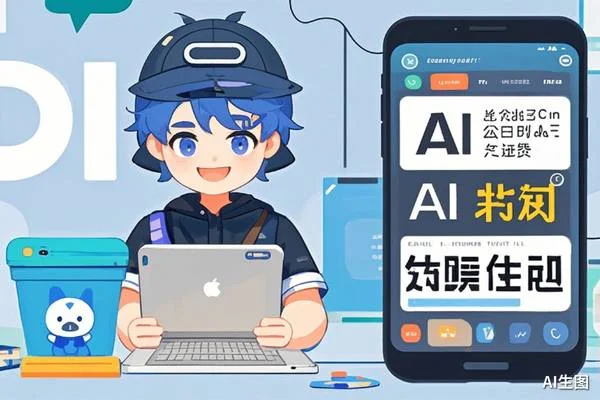
Think about it, from "Ai Sun Yan" singing "The Great Curse" to "The Sword of Little Ming" tortures the ancient souls, to "The King of Qin rides the polar bear" and "The Snow Mountain Saves the Fox" , the most popular barrier on the Chinese Internet in two years, with seven of them with the shadow of AI.

But if you look closely, there's an interesting phenomenon:None of these AI heats is a real "technology show" and they're all "crazy."

What did AI do?

We used to think that AI was a high-high black technology, a cold model of running data in the lab. But reality gave us a hard lesson.

When the AI tool sets the creation threshold below its feet, it does not make content high, but rather gives ordinary people a complete release of their sense of humor and reconciliation.

Why do you like to measure SBTI? Why do you like to watch Wang Qiang shout "Answer me"? To be honest, you're not looking at technology, you're looking for resonance. In real life, we're hit by KPI, and we're adults who can't breathe in the face of mortgage cars. But in these AI-two and hoax tests, we can make a mockery of ourselves by saying, "Well, can we admit that we are the dead?"

We thought AI would replace human creativity, and it learned first about human “salves” and self-scribbling.

Here, AI is no longer a cold productivity tool, but rather a “syborg” for ordinary people to vent their emotions and counter real pressures. It makes things that are strict, authoritative, tall (such as MBTI, such as historical characters), pulls down the altar, and turns them into a joke after everyone's tea. It's actually a pretty good massage.

Station B's basement is full of ideas about getting creative back.

How did all this come out? You're looking for it. It's basically at B.

Station B is like a huge “basement”, or an “embroid factory”. Here, there is a culture of scrambling, a tradition that naturally carries a grass-roots form of “irregularity”.

You used to make a video of the Qin Emperor riding the polar bear, or you used to make a "Snow Mountain Save the Fox" with a "Shotman" wind. You had to cut it, make it work, make it sound. But what happens now? As mentioned in the material, a couple of young employees spend five hours and 40 bucks to make a short video of an explosion with a dream AI.

Site B provides essentially a “redistribution of creative power”. It gives ordinary people who have no professional background and have a mind full of ideas, the same brush as professionisti.

The main UP, the maggots, can make SBTI, not because she knows psychology, but because she understands young people's emotional pains. At Station B, if your ideas are wild and strangling, AI can help you turn your brain holes into reality. The pleasure of this “technology parity” is beyond the reach of any high-level technology release.

The big horn in the circle of friends, it's all over the generations. Trench

However, if only at station B, the top of these barriers are “black words” in the Z generation circle. It is the micro-trust that really magnifies their volume to the national level.

Your product is the transmission chain: Station B is responsible for "producing" and Micro-Credit is responsible for "breaking the Circle".

We believe in 1.4 billion months of life, and the most terrible and fascinating part of it is that it fabricates a social network covering all ages. It is clear from the data that Twitter users over 40 years of age have a significantly higher preference than station B. What does that mean? It means that when the SBTI link or the “Snow Mountain Fox” video is thrown into the circle of friends and the family, it is no longer just a young man's high self.

When your mother asked you in her own community what it means to say, and when your father sent out the SBTI report asking if he was saying "the dead," the technological intergenerational divide was suddenly filled out by a joke.

It is not a simple porter, it is a amplifier that translates the "black language" into "social currency for all". The long text of the public sign is responsible for insulating the insinuation into a deep topic, the video is driven down to the market by social fissure, and the micro-intelligence index guides the creators like radar.

In this vast field of communication, the Ai heat trap has made a leap from “subculture” to “popularity”.

In algorithmic carnivals, don't forget that man is the only actor.

Of course, we have to tell the truth. The platform is not charity behind this intense Al-Ai campaign.

Site B pushes the "Virtual Voice Creative Project" (Voice Voice) on-line "The Dream" and platform algorithms naturally favour high-level interactive, high-end content. Users like to see, algorithms are willing to push, creators have the flow to get, and this is a perfect business closed ring.

But in this event of algorithms and traffic, I think it is the value of “humans” that is most worthy of our pause.

All the money, stripping of AI's cool coats, contained the souls of ordinary people who longed to be seen and understood.

AI can produce the sound of Sun Yin, it can paint a ridiculous picture of the Qin Emperor riding a bear, it can be calculated whether you are a “shit man” or a “holy woman”, but AI does not know why to sing The Great Curse, it does not know why to ride a bear, and it does not know the bitter and relaxed smile of our mouths when we detect the “loading dead”.

The smartest technology can't be a substitute for our sighs in the middle of the night and a smile in the circle of friends.

We're actually confirming each other's existence when we share in our friends' circles the sculptural content of AI. In this ever-expanding, ever-increasing-rolling world, perhaps only these seemingly incomprehensible “crazy” moments can make us truly feel:

Fortunately, we're still alive, warm, funny people.

I think it's enlightening and I'm looking at it.